Working Papers
Slavs Only: Overt Discrimination and Racial Disparities in Rental Housing (joint with Vladimir Avetian) under review
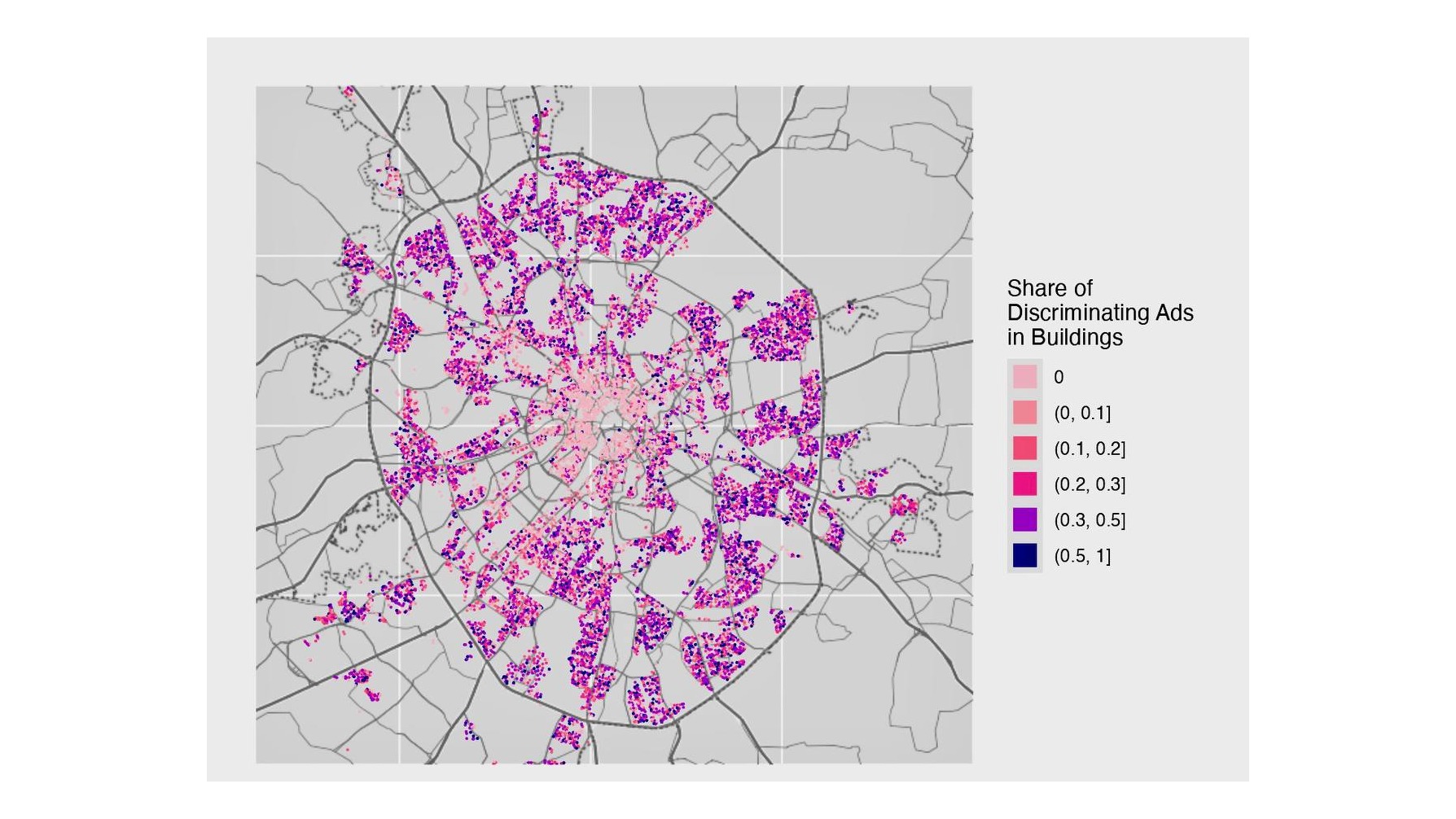
Abstract: Discriminatory behaviour is difficult to observe, let alone quantify. In Moscow’s rental market, however, landlords openly state racial requirements: we find that 20% of listings include explicit ethnic criteria. Using a novel high-frequency dataset, we show that listings with overtly discriminatory language (e.g., ''Slavs only'' or ''Russians only'') are 4% cheaper than comparable apartments in the same building. A complementary correspondence experiment reveals that both overt and subtle forms of discrimination coexist and amplify each other: minority-sounding applicants receive significantly fewer responses, especially when listings contain explicit bias. Our findings indicate that landlords are willing to bear economic costs to exclude racial minorities, directly linking prejudice to price differentials.
Public Transport: A Route to Reduce Employment Gap?
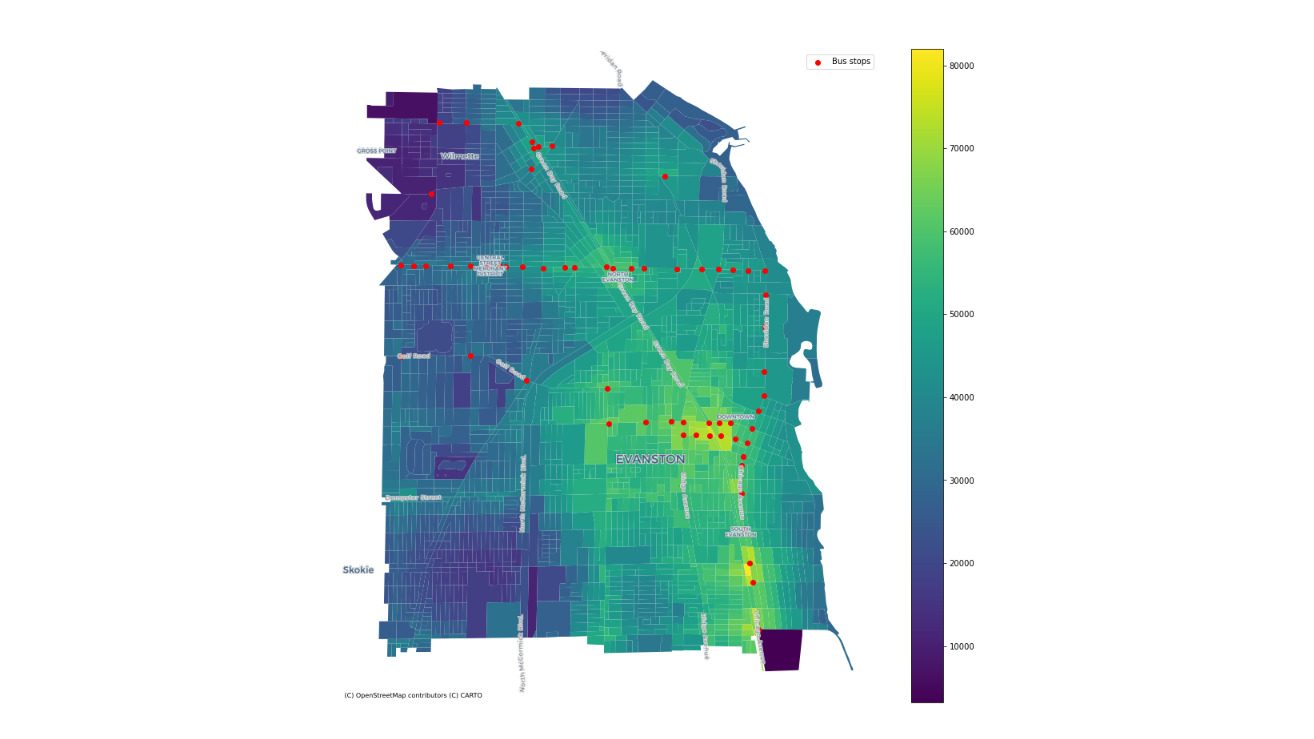
Abstract: Since commuting time is a key non-wage amenity of jobs for women (Le Barbanchon et al., 2021), public transport connectivity may be an important determinant of female employment. This paper applies a novel identification strategy to test this hypothesis. In particular, I leverage data on the rapid expansion of bus stops in the United States in 2013-2019 to study whether improved connectivity reduces the gender gap in employment. I address the canonical issue of endogeneity in public transport infrastructure development by comparing near-identical places at a super-granular level. My main identification assumption is that, within narrowly defined local labor markets, the timing and exact placement of new stops across neighboring blocks is orthogonal to changes in employment, conditional on census block fixed effects and census-tract-by-year fixed effects that absorb time invariant neighborhood heterogeneity and local labor market shocks. I find that proximity to bus stops significantly increases female employment, while male employment is largely insensitive. As a result, bus stop expansions narrow the gender employment gap, with effects that strengthen in long differences from 2014 to 2019. The evidence is consistent with a commuting channel: improved bus access increases commuting by public transport, especially for women.
Publications in Russian
Estimation of Electronic Procedures Effects in Public Procurement Under Favoritism (joint with Sergei Belev and Evgenii Matveev)
Voprosy Ekonomiki. 2023 (In Russian)
Priority Development Areas and Productivity Growth in Russian Cities (joint with Sergei Belev and Olga Suchkova)
HSE Economic Journal. 2021 (In Russian)